
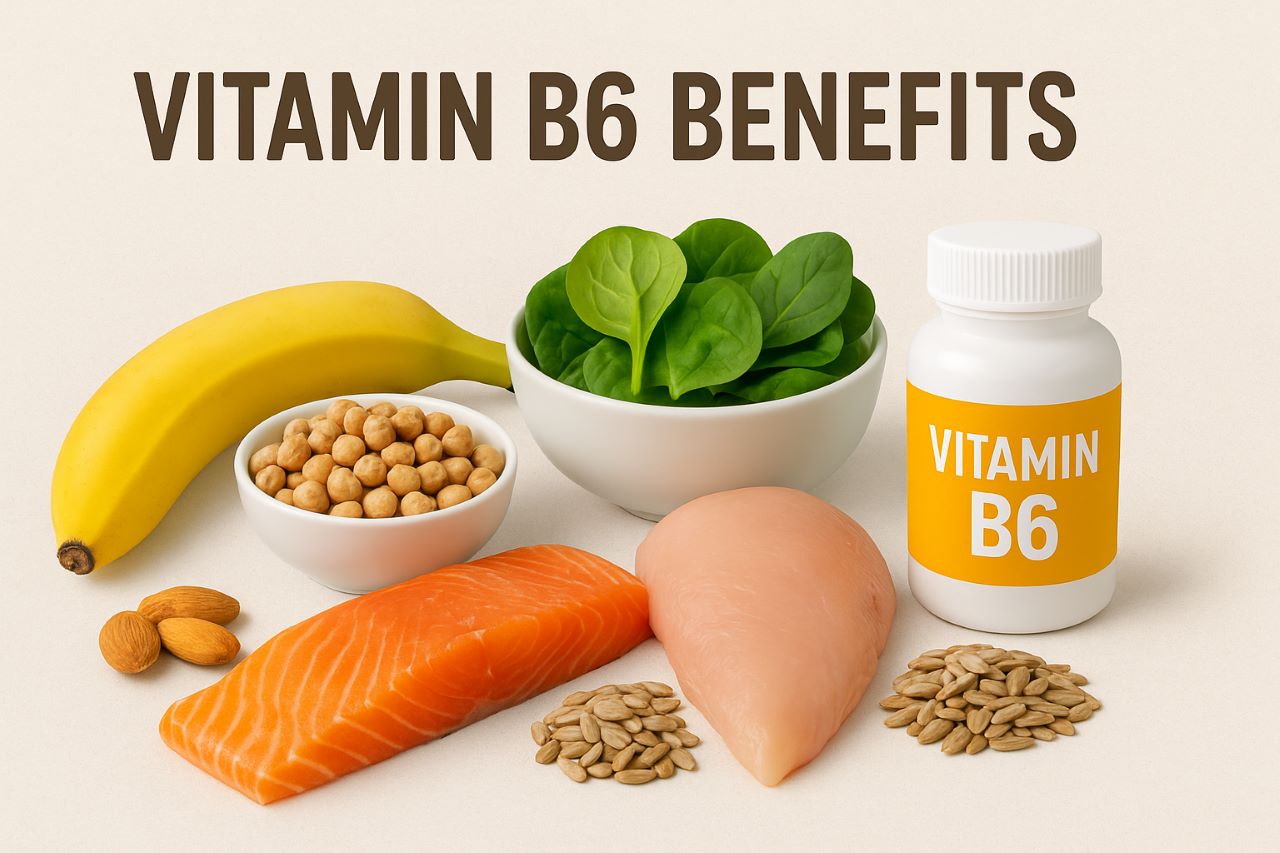
Vitamin B6, also known as pyridoxine, is one of the most versatile and hardworking vitamins. It plays a role in over 100 enzyme reactions, helping your body convert food into energy, keep your brain sharp, and maintain a strong immune system.
Because it is water-soluble, your body doesn’t store much of it, which means you need to get enough every single day through food or supplements.
How Does Vitamin B6 Work in the Body?
To begin with, Vitamin B6 acts as a coenzyme in protein metabolism, helping break down and use amino acids efficiently.
Moreover, it supports neurotransmitter production, such as serotonin and dopamine, which regulate mood and sleep.
In addition, it aids in hemoglobin formation, keeping anemia at bay, and strengthens immune function by supporting antibody production.
Vitamin B6 is distributed throughout the body. Specifically:
- In the brain: It helps synthesize neurotransmitters, impacting mood, memory, and sleep.
- In the muscles: It converts stored glycogen into glucose for energy.
- In the blood: It supports hemoglobin production and helps prevent anemia.
- In the immune system: It promotes antibody production, boosting defense against infections.
Types of Vitamin B6
If your diet isn’t sufficient, supplements can provide additional support. The most common forms include:
- Pyridoxine Hydrochloride (HCl): Standard and widely available.
- Pyridoxal-5-Phosphate (P5P): Active form, helpful in special cases like genetic disorders.
- B-Complex Supplements: Combine B6 with other B vitamins for synergistic support.
But before starting supplements, it’s important to know the safest way to take them.
Supplements Delivery Methods & Cautions:
Available Delivery Forms:
- Tablets & Capsules – Most common
- Chewable Gummies – Great for kids
- Powders – Easy to mix in smoothies
- Injectable – Reserved for medical treatment
Cautions:
- Upper Safe Limit: More than 100 mg/day can lead to nerve damage (neuropathy).
- Drug Interactions: Can interact with some medications, including certain antibiotics and anti-epileptics.
- Best Practice: Take supplements only under the guidance of a medical professional if you have a health condition or are pregnant.
Signs and Symptoms of Vitamin B6 Deficiency
Although deficiency is rare, it can occur in individuals with chronic kidney disease, alcoholism, or those on certain medications (like isoniazid).
Look out for these common symptoms:
- Fatigue and irritability
- Confusion or depression
- Tingling, burning, or numbness in hands and feet (neuropathy)
- Cracks at the corners of the mouth (cheilitis)
- Weak immune system
- Microcytic anemia
If you recognize these signs, it might be time to check your Vitamin B6 levels with a healthcare professional.
Recommended Dietary Allowance (RDA) and Optimal Allowance
To stay healthy, follow these guidelines:
- Infants (0–6 months) 0.1 mg
- Children (1–3 yrs) 0.5 mg
- Children (4–8 yrs) 0.6 mg
- Children (9–13 yrs) 1.0 mg
- Teens (14–18 yrs) Boys 1.3 mg
- Teens (14–18 yrs) Girls 1.2 mg
- Adults (19–50 yrs) 1.3 mg
- Men (51+ yrs) 1.7 mg
- Women (51+ yrs) 1.5 mg
- Pregnant Women 1.9 mg
- Breastfeeding Women 2.0 mg
💡 Always check for your local RDA, as it varies from region to region.
Food Sources
For a balanced diet, combine plant and animal sources:
- Best Plant-Based Sources:
- Bananas
- Chickpeas
- Potatoes & sweet potatoes
- Sunflower seeds
- Spinach
- Animal-Based Sources (Modest Amounts):
- Chicken breast
- Salmon and tuna
- Beef liver
- Eggs
- Milk
- With these options, it’s easy to get enough B6 from a mix of wholesome foods.
Conclusion
In conclusion, Vitamin B6 is a powerhouse nutrient for your brain, blood, and immunity. By combining whole food sources like bananas, chicken, and fish with a balanced diet, you can easily meet your daily requirements.
Supplements can help if needed, but be cautious with dosage and always seek professional advice for high-dose intake.
✅ Takeaway: Prioritize food first, supplement wisely, and enjoy the health benefits of this essential vitamin.
Follow us on Instagram and Facebook for the right information on Nutrition!
References
NIH Office of Dietary Supplements – Vitamin B6
Mayo Clinic – Vitamin B6 Overview
Harvard T.H. Chan School of Public Health – Vitamin B6